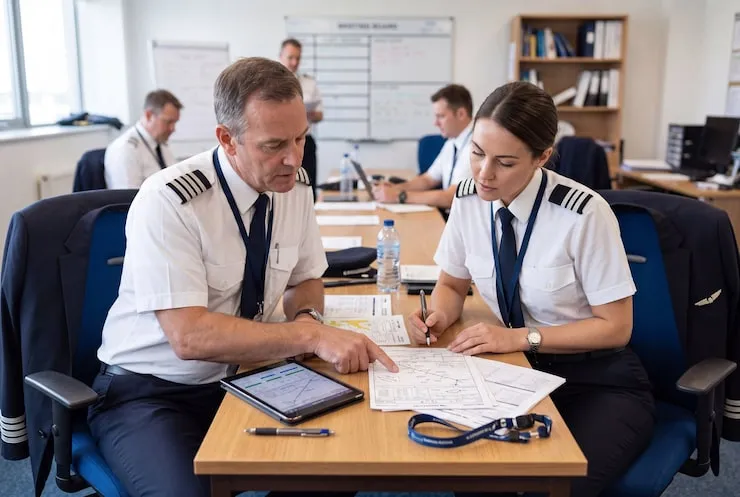
The Air India cadet pilot program is an interesting career pathway for students who dream of becoming commercial airline pilots. For aspiring aviators in Jaipur, Rajasthan, understanding how airline cadet programmes work can make the process of entering the aviation industry much easier. Becoming an airline pilot requires more than an interest in flying. Candidates must develop strong academic knowledge, communication skills, technical understanding, medical fitness, and the ability to perform under pressure. With proper preparation and professional guidance, students can understand the selection process, explore training opportunities, and prepare themselves for the responsibilities of a commercial aviation career.
Why Is Airline Pilot Training Becoming Popular Among Students in Jaipur?
Career choices among students are changing. While engineering, medicine, management, and government examinations remain popular, aviation is attracting young people who want to work in a specialised and technically demanding profession.
Jaipur has a growing student population, and many young people are exploring career opportunities outside traditional educational routes. Aviation is one such field where students can combine academic learning with practical skills and professional development.
However, entering the aviation industry requires careful planning. Students need to understand the difference between becoming a private pilot and obtaining a Commercial Pilot Licence. They must also learn about airline cadet selection, DGCA examinations, flight training, medical requirements, and additional career expenses.
For students and parents in Jaipur, understanding these requirements before enrolling in an aviation academy can prevent unnecessary confusion and help them make better educational decisions.
What Is an Airline Cadet Pilot Programme?
An airline cadet pilot programme is a structured pathway designed to prepare selected candidates for a future airline flying career.
Unlike a conventional training route, where students independently arrange their ground classes and flight training, cadet programmes generally follow a more structured airline-oriented process.
Depending on the airline and its current programme structure, the journey may involve:
Initial eligibility screening.
Academic and aptitude assessments.
Psychometric evaluations.
English communication assessments.
Personal and technical interviews.
Medical fitness assessments.
Ground school preparation.
Practical flight training.
Aircraft-specific training requirements.
The exact process differs between airlines and recruitment intakes. Therefore, candidates should always check the latest official programme information before submitting an application.
An important point to remember is that joining a preparation academy does not guarantee selection by an airline. Selection depends on the candidate's performance and the airline's recruitment criteria.
Understanding the Air India Cadet Selection Journey
Students interested in the airline industry should research the programme thoroughly before beginning their preparation.
The Air India cadet pathway involves multiple stages that evaluate whether a candidate has the academic ability, aptitude, communication skills, and professional qualities required for pilot training.
1. Academic Preparation
Physics and Mathematics are important subjects for aspiring pilots. Candidates should develop a clear understanding of fundamental concepts instead of relying only on memorisation.
Topics such as mechanics, measurements, mathematical calculations, speed, distance, and basic scientific principles are useful for understanding aviation-related subjects.
Students should also improve their English reading and communication abilities because aviation training involves technical instructions and standardised communication.
2. Aptitude Assessment
Aptitude assessments help evaluate skills that are relevant to aviation operations.
These may include:
Numerical reasoning.
Logical thinking.
Spatial awareness.
Hand-eye coordination.
Multitasking ability.
Concentration.
Memory and information processing.
Regular practice can help students understand different question formats and improve their performance.
3. Psychometric Assessment
Psychometric evaluations are designed to understand behavioural characteristics and decision-making patterns.
Pilots frequently work in situations where they need to communicate effectively, follow procedures, and remain composed.
Candidates should approach these assessments honestly rather than attempting to create an artificial personality profile.
4. Personal Interview
An interview gives the selection panel an opportunity to understand a candidate's motivation, communication skills, and awareness of the aviation profession.
Students should be prepared to explain why they want to become pilots, what they understand about the responsibilities involved, and how they handle challenging situations.
5. Medical Fitness
Medical fitness is essential for anyone pursuing a professional flying career.
Candidates should understand the applicable DGCA Class 2 and Class 1 medical requirements and consult the appropriate medical professionals.
It is better to understand medical eligibility early rather than waiting until the later stages of training.
How Students in Jaipur Can Prepare for Airline Cadet Selection
Preparation should begin well before the application deadline. Students who wait until an airline announces recruitment may find it difficult to cover all the required subjects within a limited period.
A structured learning routine can help candidates develop the necessary skills gradually.
Strengthen Your Mathematics and Physics Knowledge
Aviation involves calculations, scientific principles, and technical understanding. Students should focus on concepts rather than memorising answers.
For example, understanding speed, distance, time, basic trigonometry, and physical forces can provide a useful foundation for aviation studies.
Improve English Communication
Clear communication is an important professional skill for pilots.
Students can improve their communication by reading English material, participating in discussions, practising presentations, and learning aviation terminology.
Practise Logical Reasoning
Logical reasoning exercises help students develop structured thinking.
Regular practice with numerical patterns, analytical questions, and spatial reasoning activities can improve familiarity with aptitude assessments.
Develop Interview Confidence
Students should prepare to discuss their educational background, career interests, and understanding of aviation.
Mock interviews can help identify areas where communication or subject knowledge needs improvement.
Choosing the Right Aviation Academy in Jaipur
The quality of preparation can influence how confidently a student approaches aviation examinations and airline selection processes.
Students researching pilots and aviation career pathways should look beyond promotional claims and investigate the actual training structure offered by an institute.
A good aviation learning environment should provide a clear syllabus, experienced instructors, regular assessments, and guidance throughout the preparation process.
For students in Jaipur, choosing an academy that offers access to different stages of aviation education can make the learning journey easier to organise.
What Should Students Check Before Enrolling?
Before paying any course fee, ask the academy about:
Faculty qualifications and aviation experience.
Subjects included in the programme.
Availability of mock assessments.
Simulator training facilities.
Cadet selection preparation modules.
Class schedules and batch sizes.
Fee structure and additional expenses.
Student support and mentoring arrangements.
Students should also understand whether the academy provides preparation, practical flight training, or guidance for selecting an external flight school. These services are not interchangeable.
Understanding DGCA Ground Training and CPL Requirements
Before becoming eligible for professional airline flying positions, candidates must complete the relevant licensing requirements.
Ground training is an important stage because it develops the theoretical knowledge required to understand aircraft operations and aviation safety.
Important Subjects Covered During Ground Training
Students preparing for a Commercial Pilot Licence generally study subjects such as:
Air Navigation: Understanding routes, navigation systems, flight planning, and geographical calculations.
Aviation Meteorology: Learning about weather patterns, atmospheric conditions, wind, visibility, and weather-related flight risks.
Air Regulations: Understanding aviation laws, operating procedures, and the regulations governing civil aviation.
Technical General: Learning about aircraft systems, engines, aerodynamics, and the principles behind aircraft operation.
A strong understanding of these subjects helps students build the knowledge required for practical flying.
Exploring Flying Training in India
After completing the necessary theoretical preparation, candidates must progress towards practical flight training through an appropriate approved training organisation.
Students exploring Flying training in India should carefully compare available flight schools and understand their training arrangements.
Practical flight training is where theoretical knowledge becomes real-world experience. Under the supervision of qualified instructors, trainees learn aircraft handling, navigation, communication, and flight safety procedures.
What Happens During Practical Training?
The practical training journey generally includes several important activities:
Aircraft Familiarisation: Students learn about cockpit controls, instruments, aircraft systems, and pre-flight procedures.
Dual Flying: Candidates fly with an instructor who explains aircraft handling and operational procedures.
Solo Flying: After receiving the required authorisation and demonstrating sufficient competence, students undertake solo flights.
Cross-Country Flying: Trainees learn route planning, navigation, fuel calculations, and communication across different air traffic control areas.
Instrument Flying: Students develop the ability to interpret instruments and follow procedures during instrument flight conditions.
Night Flying: Candidates learn the procedures and considerations associated with flying after sunset.
The duration of practical training can depend on weather, aircraft availability, instructor schedules, and individual progress.
Why Simulator Training Is Valuable for Future Pilots
Flight simulator training provides an opportunity to understand cockpit operations in a controlled learning environment.
Students can become familiar with instrument displays, cockpit layouts, navigation procedures, and different simulated flight situations without being exposed to actual flight conditions.
Simulator sessions can also help students practise communication, decision-making, and procedural discipline.
For beginners, simulator exposure can make aviation concepts easier to understand. For candidates preparing for airline assessments, it can provide familiarity with cockpit-related tasks and structured procedures.
However, simulator training should complement rather than replace the practical flight experience and regulatory requirements applicable to pilot licensing.
Understanding Pilot Training Expenses in India
Financial planning is one of the most important responsibilities for students and their families.
The pilot training fees in India depend on the selected programme, flight school, training location, aircraft, and services included in the package.
Students should not assume that every academy offers the same facilities or that the advertised course price represents the complete cost of becoming a commercial pilot.
What Expenses Should Families Consider?
A complete financial plan may include:
Ground school tuition fees.
Flight training charges.
Simulator sessions.
DGCA examination expenses.
Medical examination costs.
Study materials.
Accommodation and transportation.
Licence-related documentation.
Additional flying hours, if required.
Type rating expenses.
Travel and other personal costs.
Families should ask for a written fee breakdown and clarify the payment schedule before enrolling.
Understanding the Overall Financial Commitment
The pilot training cost in India can differ significantly between conventional CPL pathways and airline cadet programmes.
Cadet programmes may include specific training arrangements and additional components depending on the airline and training provider.
Students should compare the total financial commitment, payment milestones, refund conditions, and services included rather than selecting a programme based only on its initial fee.
It is also sensible to maintain an additional financial allowance for unexpected expenses or delays during training.
Can Students from Rajasthan Study Aviation Without Moving to Another City Immediately?
Many students assume that they must relocate to a major aviation hub as soon as they decide to become pilots. However, the initial stages of career research and theoretical preparation can often be explored from their home city.
For students searching for pilot training in India Hyderabad, comparing options in Jaipur and other cities can help them understand the differences in training environments, accessibility, and programme structure.
Students from Jaipur, Jodhpur, Kota, Ajmer, Udaipur, and nearby towns can first investigate local aviation education options.
They can discuss eligibility, understand DGCA requirements, explore preparation courses, and then decide where to complete their practical flight training.
The right choice depends on individual requirements rather than simply selecting the nearest or most heavily advertised institute.
What Skills Make a Student Suitable for an Aviation Career?
Academic performance is important, but professional aviation also requires a combination of personal and technical abilities.
Decision-Making Ability
Pilots need to evaluate information and follow appropriate procedures. Good decision-making develops through learning, practical experience, and consistent training.
Discipline and Responsibility
Aviation operates within strict safety procedures. Pilots must understand the importance of checklists, documentation, and following established instructions.
Communication Skills
Clear communication helps flight crew members coordinate with each other and air traffic control.
Situational Awareness
Pilots must understand what is happening around their aircraft and recognise how changing conditions may affect a flight.
Emotional Control
Remaining calm and following procedures during difficult situations is an important professional quality.
Students can start developing these abilities during their academic years through consistent practice, teamwork, and structured learning.
How PilotsPathway Supports Aspiring Pilots in Jaipur
PilotsPathway provides aviation education and career preparation opportunities for students interested in commercial aviation.
Located in Malviya Nagar, Jaipur, the academy offers programmes covering CPL ground classes, flight simulator training, cadet pilot preparation, foundation aviation education, and guidance for practical flight training.
Its cadet preparation programme focuses on academic subjects, aptitude assessments, psychometric preparation, and interview skills for airline selection processes.
Students can explore training options based on their current educational background and career objectives.
The academy also provides guidance for selecting suitable flight training partner schools in India and abroad. Students should understand the difference between this guidance service and directly conducting practical flight training.
For families in Jaipur, having access to aviation-related counselling and structured preparation can help make the initial stages of the journey more understandable.
Why Early Preparation Can Make a Difference
Students who start preparing early have more time to understand aviation as a profession.
Rather than rushing into an expensive programme, they can first evaluate their academic eligibility, medical requirements, career expectations, and financial resources.
A foundation course can be useful for beginners who want to understand basic aviation concepts before moving into advanced subjects.
Students who are already preparing for airline selection can benefit from structured assessments and feedback that highlight areas requiring improvement.
The objective should not simply be to complete a course. It should be to develop the knowledge, discipline, and professional attitude required for a long-term aviation career.
Begin Your Journey Towards an Airline Pilot Career
Becoming an airline pilot is a demanding but rewarding professional goal. It requires a clear understanding of training requirements, consistent academic preparation, medical fitness, practical experience, and financial planning.
For aspiring pilots in Jaipur, the first step is to understand the available career pathways and select an educational programme that matches their individual needs.
Whether you are interested in airline cadet selection, CPL ground preparation, simulator learning, or prac

Written bypilots pathway
Train with Pilots Pathway for DGCA-approved ground classes, simulator sessions and flying hours, built for aspiring airline pilots across India who want a route to the cockpit.
Continue Reading
More articles from Business and beyond
Comments (0)
Join the conversation about this article
Sign in to commentNo comments yet
Be the first to share your thoughts about this article!