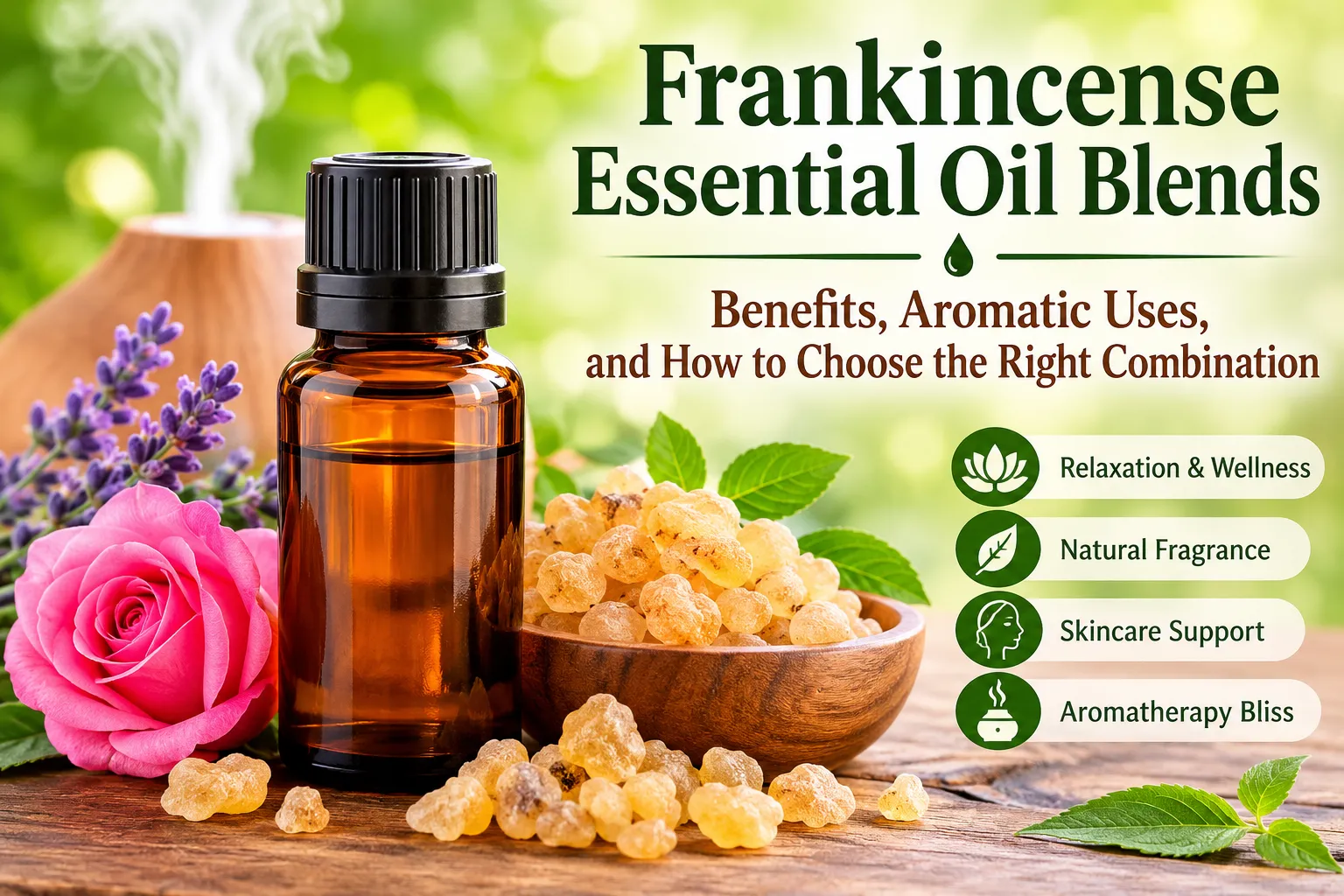
Frankincense has been valued for centuries for its rich, warm, woody aroma and versatility in aromatherapy and personal care. Today, frankincense oil combinations are popular among people looking to create relaxing environments, enhance skincare routines, and enjoy distinctive botanical fragrances. When combined with complementary essential oils, frankincense creates balanced aromatic profiles suitable for different preferences and everyday applications.
1. What Are Frankincense Essential Oil Blends?
Frankincense essential oil is extracted from the resin of trees belonging to the Boswellia genus. It is traditionally appreciated for its earthy, slightly sweet, woody, and resinous fragrance.
Blending this oil with other botanical extracts creates different aromatic experiences. Depending on the selected ingredients, a blend can have floral, citrusy, spicy, herbal, or deeply woody characteristics.
Some popular ingredients used in frankincense essential oil blends include:
Lavender: Adds a soft, floral aroma that complements frankincense.
Sandalwood: Creates a rich, smooth, woody fragrance.
Bergamot: Introduces a fresh, bright citrus note.
Rose: Provides a delicate floral fragrance.
Cedarwood: Adds warm, earthy, and woody characteristics.
Myrrh: Creates a deep, resinous aromatic combination.
These combinations allow users to explore different fragrances according to their personal preferences and intended applications.
2. Why Is Frankincense Popular in Aromatherapy?
Frankincense is widely appreciated in aromatherapy because of its distinctive fragrance and versatility. Its warm, grounding scent makes it a popular choice for meditation spaces, relaxation routines, and personal fragrance collections.
Here are some reasons people enjoy incorporating it into their aromatic routines.
A Relaxing Atmosphere
Frankincense has a warm and comforting aroma that many people enjoy during quiet evenings, meditation, and relaxation practices. Combining it with lavender or sandalwood can create a pleasant environment.
A Rich Botanical Fragrance
Its woody and resinous scent works well with floral, citrus, and herbal essential oils. This versatility makes it suitable for creating personalized aromatic combinations.
Versatile Aromatic Applications
Frankincense can be incorporated into diffuser blends, massage oil preparations, and DIY personal care formulations when used with appropriate dilution and safety precautions.
A Traditional Botanical Ingredient
Frankincense resin has a long history of use in traditional perfumery, incense, and aromatic practices, making it an interesting ingredient for botanical enthusiasts.
3. Best Essential Oils to Combine with Frankincense
Choosing complementary oils is important when creating a balanced fragrance. Different essential oils contribute unique aromatic notes.
Essential OilAromatic CharacteristicsLavenderSoft, floral, and freshSandalwoodCreamy, warm, and woodyBergamotFresh, citrusy, and brightCedarwoodEarthy, dry, and woodyRoseSweet, floral, and delicateMyrrhDeep, warm, and resinous
For example, frankincense and lavender create a gentle floral-woody combination, while frankincense and bergamot offer a brighter fragrance with contrasting citrus and resinous notes.
Experimenting with small quantities can help you discover combinations that match your preferred aromatic profile.
4. Popular Frankincense Blend Ideas for Everyday Use
There are several ways to enjoy the fragrance of frankincense through different botanical combinations.
Frankincense and Lavender
This combination brings together the warm, woody character of frankincense and the soft floral fragrance of lavender. It is a popular choice for evening aromatherapy routines and quiet relaxation spaces.
Frankincense and Sandalwood
Both oils have rich woody characteristics. Together, they create a smooth, sophisticated fragrance that works particularly well in meditation environments and personal fragrance preparations.
Frankincense and Bergamot
Bergamot introduces refreshing citrus notes that balance the deeper aroma of frankincense. This combination is suitable for people who prefer fresh yet warm fragrances.
Frankincense and Cedarwood
Cedarwood adds an earthy, grounding dimension to frankincense. The combination creates a natural woody aroma suitable for home fragrance applications.
Frankincense and Rose
Rose adds a delicate floral character to the warm resinous fragrance of frankincense. This pairing is especially interesting for floral fragrance enthusiasts.
5. How to Use Frankincense Oil Combinations Safely
Essential oils are highly concentrated botanical extracts. Proper handling and dilution are important when incorporating them into everyday routines.
Consider these common applications:
Diffuser Use: Follow the diffuser manufacturer’s instructions and the recommended number of drops for your device and room size. Maintain appropriate ventilation.
Massage Oil Preparations: Dilute essential oils in a suitable carrier oil, such as jojoba, sweet almond, or fractionated coconut oil. A qualified aromatherapist can help determine an appropriate dilution.
Personal Care Formulations: Frankincense can be incorporated into properly formulated skincare products. Always consider skin compatibility, ingredient concentrations, and product stability.
DIY Aromatic Projects: These oils can be explored in suitable homemade aromatic preparations, provided that the formulation and intended application are safe.
Avoid applying undiluted essential oils directly to the skin. Perform a patch test before topical use, keep oils away from eyes and sensitive areas, and seek professional guidance when using essential oils during pregnancy or around children and pets.
6. How to Choose High-Quality Frankincense Blends
Product quality should always be considered before purchasing any essential oil combination. Not every product marketed as natural or pure provides the same level of ingredient transparency.
Here are some important factors to examine:
Botanical Identification: Check whether the product identifies the botanical ingredients and their plant species.
Ingredient Transparency: Review the complete ingredient list to understand what is included in the formulation.
Sourcing Information: Look for details about the geographical origin and sourcing practices.
Extraction Methods: Understand how the essential oils are obtained and processed.
Quality Testing: Look for available testing documentation and quality verification information.
Packaging: Dark glass bottles can help protect essential oils from light exposure.
Storage Instructions: Follow the manufacturer’s recommendations for maintaining product quality.
Taking time to evaluate these details can help you make a more informed purchasing decision.
7. Explore Botanical Aromatic Products at Miracle Botanicals Essential Oils
Finding suitable botanical ingredients becomes easier when shopping from a retailer that offers a diverse selection of essential oils and aromatic products.
Miracle Botanicals Essential Oils offers a range of botanical products, including essential oils, carrier oils, hydrosols, and handcrafted aromatic blends. Customers can explore different plant extracts and discover ingredients that complement their aromatherapy and personal care preferences.
Whether you enjoy woody fragrances, refreshing citrus aromas, or delicate floral combinations, exploring different botanical ingredients can help you find products that suit your preferences.
Before purchasing, review individual product descriptions, ingredients, sourcing information, and usage recommendations to make an informed choice.
8. Buying Essential Oils Online: What Should You Consider?
Online shopping makes it easier to explore different botanical ingredients, compare product descriptions, and discover specialty aromatic combinations that may not be available in nearby stores.
However, choosing a trustworthy supplier remains important. Compare product information, ingredient transparency, available quality documentation, pricing, shipping policies, and customer support before placing an order.
For additional guidance, read our related article: Buy Organic Essential Oils Online vs. Buying from Local Stores: Which Is Better?.
This resource explains the differences between online and local shopping, including product variety, quality transparency, pricing, convenience, and supplier selection. It can help readers make better-informed decisions when exploring botanical products.
Conclusion
Frankincense is a versatile botanical ingredient with a distinctive woody and resinous fragrance. Pairing it with lavender, sandalwood, bergamot, cedarwood, or rose creates different aromatic experiences for relaxation routines, home fragrance, and personal care formulations.
Exploring frankincense essential oil blends allows botanical enthusiasts to discover new fragrance combinations while understanding the importance of quality, ingredient transparency, and safe usage.
Choose products carefully, follow appropriate dilution guidelines, and enjoy exploring the diverse aromatic possibilities of frankincense.
Frequently Asked Questions (FAQs)
1. What essential oils blend well with frankincense?
Frankincense pairs well with lavender, sandalwood, bergamot, cedarwood, rose, and myrrh. These oils complement its warm, woody, and resinous fragrance.
2. Can frankincense essential oil be used in a diffuser?
Yes. Frankincense can be used in an essential oil diffuser according to the manufacturer’s instructions. It can also be combined with complementary oils to create personalized aromatic experiences.
3. Is frankincense suitable for skincare formulations?
Frankincense is used in some skincare formulations. However, it must be properly diluted and incorporated into a suitable formulation. Patch testing and professional guidance are recommended.
4. What carrier oils work well with frankincense?
Jojoba oil, sweet almond oil, and fractionated coconut oil are commonly used carrier oils for diluting essential oils. Choose one according to your skin preferences and formulation requirements.
5. How should frankincense essential oil blends be stored?
Store essential oils in tightly closed, dark glass bottles in a cool, dry location away from direct sunlight and excessive heat. Always follow the manufacturer’s storage recommendations.
Continue Reading
More articles from Business and beyond
Comments (0)
Join the conversation about this article
Sign in to commentNo comments yet
Be the first to share your thoughts about this article!