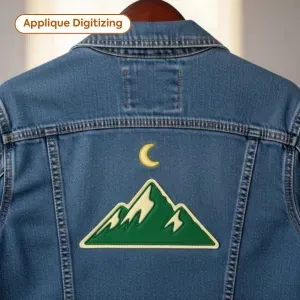
The embroidery industry continues to grow as businesses seek reliable ways to produce customized apparel, professional uniforms, and personalized accessories. Applique embroidery has become a popular choice because it combines fabric pieces with decorative stitching to create distinctive designs. However, achieving consistent results requires accurate digitizing, careful stitch planning, and an understanding of different fabric types.
Premium applique digitizing in USA helps embroidery businesses transform artwork, lettering, and logos into machine readable embroidery files. With proper digitizing, businesses can achieve cleaner fabric edges, accurate placement, and a professional finish across various products. Understanding the process, its benefits, and the factors that influence quality can help businesses choose the right digitizing solution for their production needs.
What Is Premium Applique Digitizing?
Applique digitizing is the process of converting artwork into a digital embroidery file that guides an embroidery machine through the steps required to attach fabric pieces to a garment or other material. Unlike traditional embroidery, which may use thread to fill an entire design, applique uses fabric as part of the design itself.
The process typically includes placement stitches, fabric cutting guidelines, tack down stitches, and finishing stitches. Each stage must be programmed correctly to ensure that the fabric remains secure and the finished design matches the original artwork.
Premium applique digitizing focuses on technical accuracy, efficient stitch sequences, suitable stitch density, and proper registration. Depending on the embroidery machine, the final file may be supplied in formats such as DST, PES, or EXP.
How to Choose a Reliable Applique Digitizing Service
Choosing an appropriate digitizing service requires more than comparing prices. Businesses should consider technical experience, communication, file compatibility, and the provider's ability to handle different materials and design complexities.
Before submitting an order, prepare clear artwork and specify the required design dimensions, target fabric, embroidery machine format, and intended application. These details help the digitizer make suitable decisions about stitch direction, underlay, density, and pull compensation.
It is also helpful to ask whether revisions are available if the design needs adjustment. For complex or high volume projects, requesting a test sew out can reveal alignment or fabric related issues before full production begins.
File compatibility deserves particular attention. A file that opens successfully may still require adjustments to achieve the intended result on a specific machine or material. Testing the design under actual production conditions provides a more reliable assessment of quality.
Best Practices for Better Applique Embroidery Results
Successful applique embroidery depends on cooperation between the digitizer and the production team. Selecting suitable fabric, stabilizer, and thread helps support the digitized design.
Operators should follow the recommended stitching sequence, position fabric carefully, and trim excess material without damaging the garment. Testing on a similar fabric before beginning a large order can help identify problems with tension, registration, or stitch coverage.
Maintaining consistent machine settings and documenting successful production settings can also improve repeatability. These practices are particularly valuable for businesses fulfilling recurring orders or producing customized items in larger quantities.
Future of Premium Applique Digitizing in the USA
Advances in embroidery software and machine technology continue to improve design preparation and production workflows. Businesses can now work with increasingly detailed artwork while developing customized products for different customer preferences.
However, software alone does not guarantee a high quality result. Practical knowledge of fabrics, stitch behavior, machine limitations, and quality control remains essential. Experienced digitizing and careful testing help translate digital designs into embroidery that performs well during production.
As demand for customized clothing and personalized merchandise continues, premium applique digitizing remains a useful option for businesses seeking creative flexibility and dependable embroidery results.
Conclusion
Premium applique digitizing in USA provides embroidery businesses with a practical way to create detailed, customized, and professional fabric based designs. From apparel and sports uniforms to corporate merchandise and home textiles, accurate digitizing supports better placement, cleaner finishing, and more consistent production.
By selecting a knowledgeable digitizing provider, supplying clear project requirements, and testing designs before large production runs, businesses can improve embroidery quality and reduce avoidable production issues.
A combination of technical expertise, suitable materials, and careful quality control helps ensure that applique embroidery meets both customer expectations and practical production requirements.
Frequently Asked Questions
1. What is premium applique digitizing used for?
Premium applique digitizing converts artwork into embroidery machine files that guide fabric placement, cutting, securing, and finishing. It is commonly used for apparel, sports uniforms, children's clothing, promotional products, and decorative textiles.
2. Which file formats are available for applique digitizing?
Common formats include DST, PES, and EXP, although compatibility depends on the embroidery machine. Customers should confirm their machine's supported format before ordering a digitized design.
3. How can I improve the quality of applique embroidery?
Use suitable fabric and stabilizer, provide clear artwork, specify the correct design dimensions, and ensure that placement and finishing stitches are properly digitized. A test sew out can help identify issues before production.
4. Is premium applique digitizing suitable for bulk orders?
Yes. A properly prepared embroidery file can support repeatable production across multiple garments. Consistent materials, appropriate machine settings, and quality checks are important for maintaining reliable results in bulk orders.
Continue Reading
More articles from Business and beyond
Comments (0)
Join the conversation about this article
Sign in to commentNo comments yet
Be the first to share your thoughts about this article!